
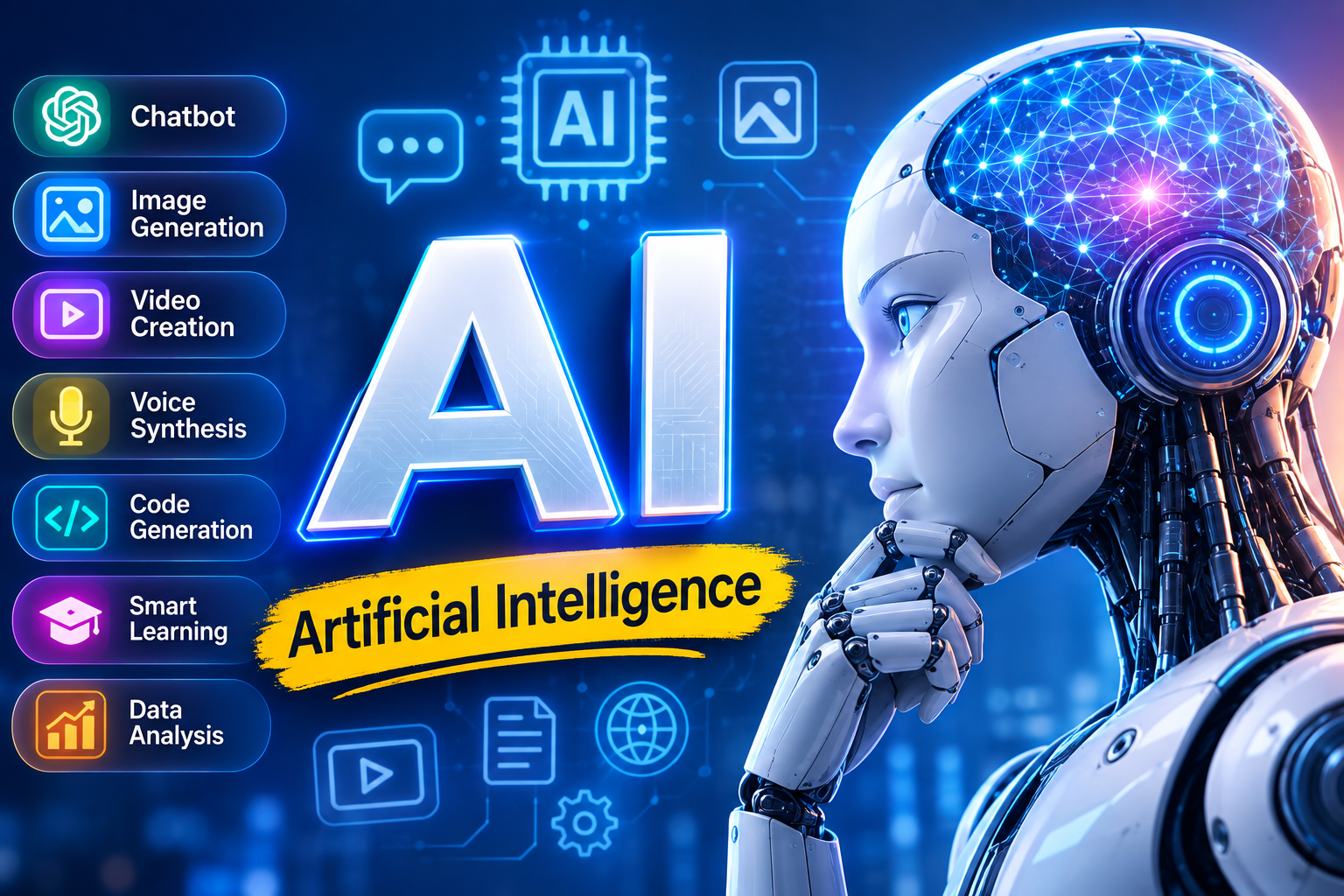
Artificial Intelligence (AI) is one of the most important technologies of the modern world. It refers to the ability of computers and machines to perform tasks that normally require human intelligence. These tasks include learning, problem-solving, understanding language, recognizing images, making decisions, and analyzing large amounts of information. AI is changing the way people work, communicate, learn, and use technology.
AI works by using algorithms, data, and powerful computer systems. A common form of AI is Machine Learning, where computers learn from large amounts of data and improve their performance over time without being explicitly programmed for every situation. Another important area is Deep Learning, which uses artificial neural networks to solve complex problems such as image recognition, speech processing, and natural language understanding.
Today, AI is used in many areas of our daily lives. Smartphone assistants, recommendation systems, online search engines, translation tools, chatbots, and navigation applications all use AI in different ways. For example, streaming platforms can recommend movies or videos based on a user’s interests. Online shopping websites can suggest products by analyzing previous searches and purchases.
AI is also making a significant impact on education. AI-powered learning platforms can provide personalized lessons, answer students’ questions, help with writing, and explain difficult topics. Teachers can also use AI tools to prepare educational materials, organize information, and save time on repetitive tasks.
In healthcare, AI can help doctors analyze medical images, identify potential diseases, organize patient information, and support medical research. AI does not replace medical professionals, but it can provide useful information that helps them make better decisions.
The business world is another major area where AI is being used. Companies use AI for customer service, marketing, data analysis, fraud detection, content creation, and automation. AI-powered chatbots can answer customer questions 24 hours a day, while data-analysis systems can identify trends that may be difficult for humans to discover manually.
AI is also creating new opportunities for individuals. People can use AI tools to create content, generate images, write articles, develop software, analyze data, and automate repetitive tasks. Freelancers and entrepreneurs are increasingly using AI to improve productivity and develop new online services.
However, AI also has some challenges. Privacy, misinformation, cybersecurity, job displacement, copyright issues, and the misuse of AI-generated content are important concerns. AI systems can sometimes produce incorrect or biased information, so users should verify important information before relying on it.
The future of AI is likely to be even more advanced. AI may become increasingly integrated into education, healthcare, transportation, business, entertainment, and everyday technology. The key is to use AI responsibly and ethically while maintaining human judgment and creativity.
In conclusion, Artificial Intelligence is transforming the modern world. It offers enormous opportunities to improve productivity, solve complex problems, and make everyday life easier. At the same time, responsible use, human oversight, and proper regulations are essential to ensure that AI benefits society as a whole.